|
1
|
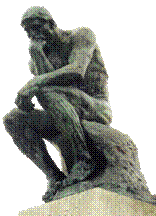
- What is Critical Thinking?
- Why is it increasingly important
for ourselves as individuals
and as a society?
|
|
2
|
- Independent Thought
- Free will of individuals
- Independent of royalty,
clergy, tradition, totalitarianism
- & Scientific Principles
- Scientific Method
- Evidence, Hypothesis, Testing
- Reason and Logic
- Deduction and Induction
- Not incompatible with spiritual beliefs
|
|
3
|
- Important at both the global and personal levels
- The rise of independent thinking is a
drastic change in human history
- It has an incredible positive potential,
if we take advantage of it
- More critical thinking and knowledge is
required just to function as individuals
in our society
- “It is not so much that the Organization is
going to push the individual around any
more than it used to. It is that it is becoming
increasingly hard for the individual to figure
out when he is being pushed around.”
– William H. Whyte, Jr.
|
|
4
|
- 1) An Ever-Advancing Civilization
- 2) The Independent Investigation of Truth
- Bahá’ís also believe in:
- One God
- Unity of the World’s
Major Religions
- Equality of Women & Men
- Unity in Diversity
- Establishment of World Peace
|
|
5
|
- Hegel
- Early 19th-century philosopher Hegel wrote obscure, difficult work that
heavily influenced the world, mainly through Marx.
- Hegel believed that humanity progresses toward freedom, and that
history is a linear path towards a perfect society.
- Unfortunately, he also believed that this path culminated in him.
- Little did Hegel suspect that for 1300 years Islam already held a view
of history moving towards a perfect society, ordered by God through His
Prophets. Bahá’ís build on this Islamic worldview.
- Conclusions:
- Bahá’ís believe that world peace is inevitable, but it is up to
humanity to dictate how and when it is implemented
- Science and Independent Thinking are essential tools
to help the world reach peace sooner
- Humanity has finally evolved enough to use freedom wisely, and must now
develop its new capabilities
|
|
6
|
- 1) Economic Reasons
- Postindustrial Economy – Service & Information
- Shift from physical labor to mental labor
- 2) Educational Reasons
- Rising literacy rate throughout world
- Continuing education throughout life; increase in life expectancy
- As more information is stored, knowledge builds on itself
- 3) Technological Reasons
- Original mass media allowed a few to reach the masses
- New technologies allow everyone to communicate to everyone
- 4) Religious Reasons ...
- 5) Political Reasons ...
|
|
7
|
- Free Will is a key concept in
nearly all of the world’s
belief systems
- Absolute freedom is necessary to
make completely moral choices
- The “jurisdiction” of religion
shrinks as science disproves
religious beliefs
- Hungry for spiritual fulfillment, people cling to spurious
Pseudosciences and New Age fads
|
|
8
|
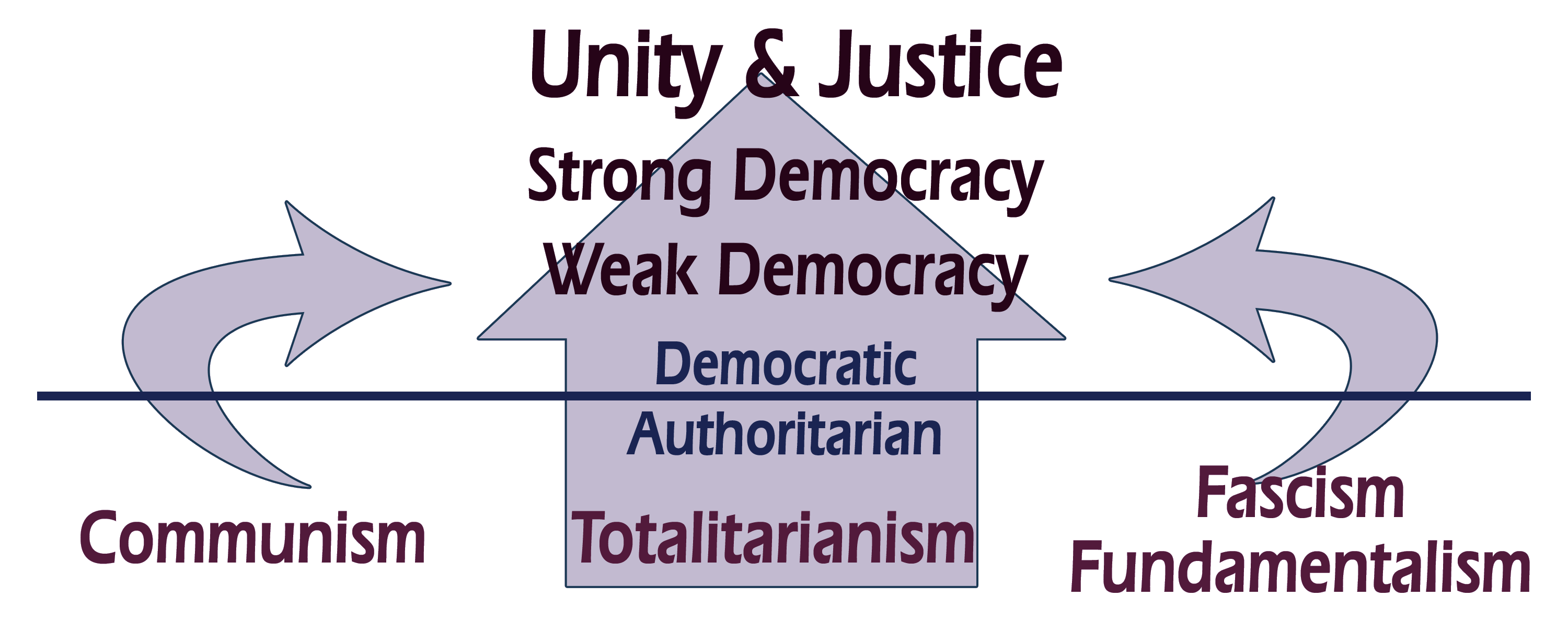
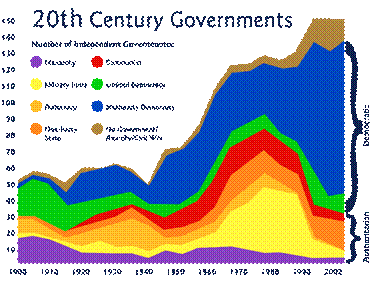
- What is “Strong Democracy?”
- Complete Equality
- Direct Democracy: Referenda
- Multiple Parties
- Proportional Representation
|
|
9
|
|
|
10
|
- Disinformation vs. Misinformation
- 1) Propaganda
- 2) Marketing
- 3) Pseudoscience
- 4) Media Bias
- 5) Self-Delusion
|
|
11
|
- Is propaganda even necessary?
Or will citizens censor
themselves?
- The most effective political
manipulations are not direct
lies, but distractions and
the polarization and
oversimplification of issues
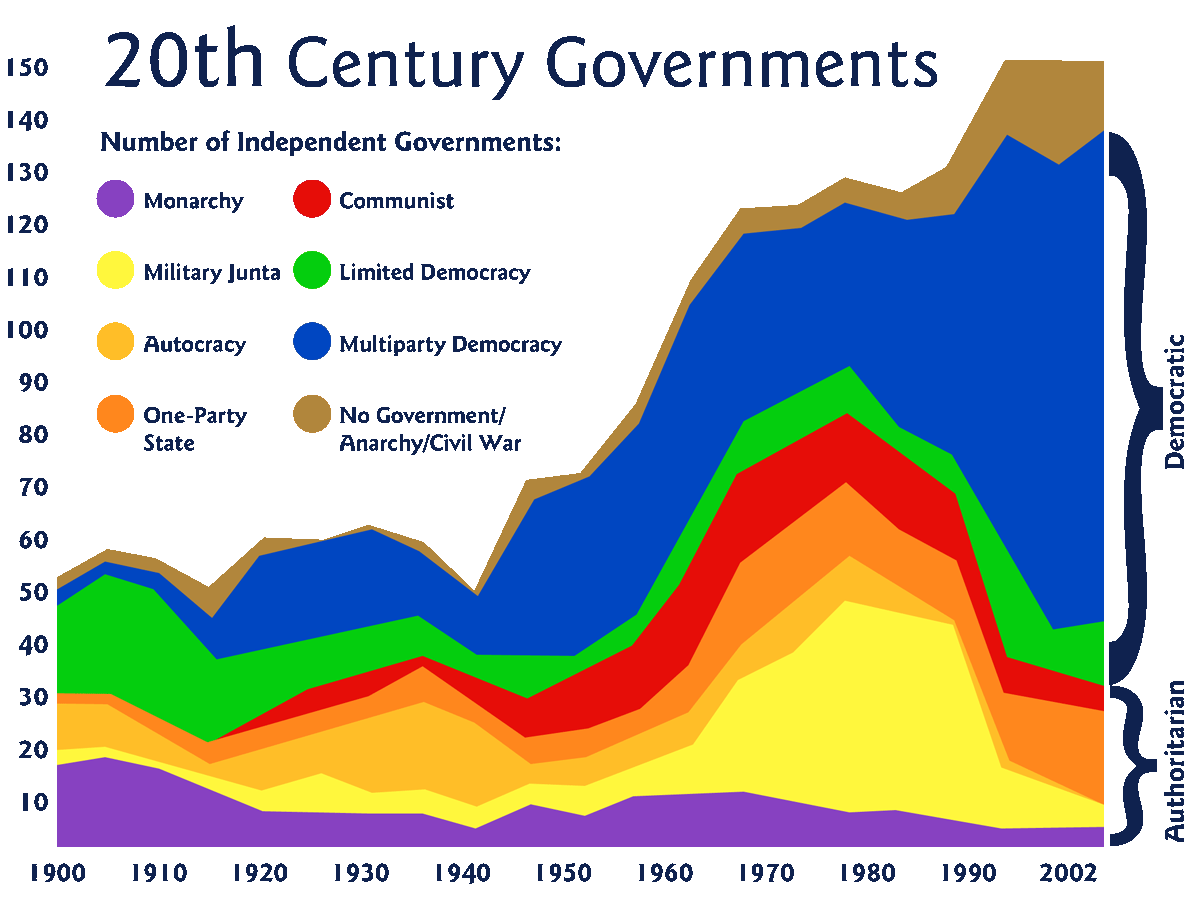
- Totalitarian governments do
exist, but the biggest danger
in democratic societies is apathy
- “The road to tyranny, we must never forget,
begins with the destruction of the truth.”
- Bill Clinton, 1995
|
|
12
|
- Lying with Words
- AOL Cancellation Policy
- “You will not be charged your first
monthly fee unless you don’t cancel
within the first 30 days.”
- Lying with Images
- Spring Water Scenes
- Over 25% of bottled water is tap water
- Products digitally inserted on TV shows
- Lying with Numbers
- University of South Florida, 1995:
- Raised average SAT scores by not counting bottom 6% of students
|
|
13
|
- Third-Party Tactic Examples
- Mothers Opposing Pollution (MOP)
- Campaign against plastic milk bottles, 1993
- Asbestos
- Found to be dangerous as early as 1918
- By 1960, 52 papers found it harmful,
11 found it benign
- David Manning, June 2001
- Found by Newsweek to be a fake reviewer
created by Columbia Pictures’ marketing department
to endorse such gems as “The Animal” and “A Knight’s Tale”
- VNRs & Press Releases
- Nearly 40% of newspaper content starts as company press releases
- Video News Releases: Filmed by PR firms and aired unedited as news
|
|
14
|
- Unfalsifiable beliefs that use the
trappings of science to appear scientific
- Holes are rationalized away
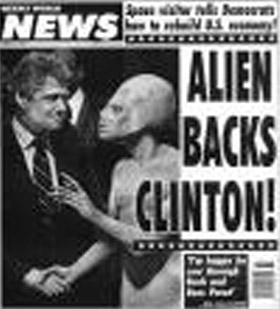
- e.g. 71% of Americans believe the government
is covering up evidence of alien spacecraft
- Crop Circles & Bigfoot
- Tampered Halloween Candy
- Subliminal Advertising
- The Bible Code
|
|
15
|
- No convincing evidence for:
- Atlantis
- Astrology
- Crystal power
- Channeling
- Dowsing
- Alchemy
- Bigfoot
- Loch Ness
monster
- Some evidence supports:
|
|
16
|
- Ideology & Bias
- International issues are often treated
“conservatively,” nationalistically
- Local issues are often “liberal,”
anti-corporation, pro-environment
- Ignorance: Self-Delusion & Mistakes
- 1) Prior “template” of story
- 2) Not trained in subject
- 3) Insignificant/unreliable reports overemphasized
- 4) Statistics taken out of context
- Robert J. Samuelson: “Psycho-facts”
- Beware of terrorism ... and sharks!
- Above all, Sensationalism
|
|
17
|
- Fate vs. Coincidence
- Running into someone familiar
- Chance & Gambling
- Streaks and lucky hands have been disproved
- “Seven Sins of Memory”
- Daniel L. Schacter: Transience,
absentmindedness, blocking, misattribution,
suggestibility, bias, and persistence
- “Therefore, it is evident that the method of reason is not perfect ...
For if it were perfect, all ought to be united in their ideas and
agreed in their opinions.”
- ‘Abdu’l-Baha, Some Answered Questions
|
|
18
|
|
|
19
|
- Applying Critical Thinking depends on organizing our knowledge so we are
not overwhelmed
- The Universal Library:
- Amazon’s “Search Inside the Book”
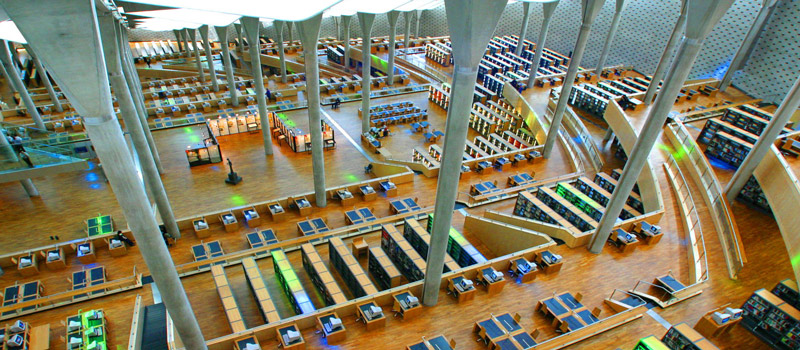
- The Library at Alexandria – rebuilt:
|
|
20
|
- Occam’s Razor
- All else being equal, the simplest solution tends to be true
- Burden of Proof
- A good example: Evolution
- Sagan’s Balance
- Extraordinary claims
require extraordinary proof
- Science: Induction
- Drawing conclusions based
on high probability, rather
than certainty
|
|
21
|
- Increased Individual Rights
& Knowledge
- Give us Increased
Responsibility to:
- Participate in Democracy
- Spread information wisely
- Be responsible consumers
- Follow ideals of tolerance and justice
- Educate ourselves continuously
- Use alternatives to terrorism and violence
- Explore critical thinking on our own ...
|

 Notes
Notes